
Summary:
Choosing the Right Deck Materials for Connecticut Weather
Your material choice determines everything about your deck’s future. Connecticut’s climate is tough on outdoor structures, and what works in Arizona won’t necessarily work here.
Wood decks offer that classic, natural beauty that many homeowners love. Pressure-treated lumber, cedar, and redwood are common choices, each with distinct characteristics. Wood stays cooler in direct sunlight and can be customized with stains and finishes to match your home’s aesthetic.
But Connecticut’s weather demands honest conversation about wood’s challenges. Regular maintenance isn’t optional—it’s essential for safety and longevity. You’re looking at annual staining or sealing, potential repairs from freeze-thaw damage, and the ongoing battle against moisture, UV rays, and temperature swings that cause warping and splitting.
Composite Decking: Low-Maintenance Alternative for Busy Homeowners

Composite decking has transformed how Connecticut homeowners think about outdoor living spaces. Made from wood fibers and recycled plastics, composite materials resist the moisture, temperature fluctuations, and UV damage that plague traditional wood decks.
The maintenance difference is dramatic. Where wood decks require annual staining and constant vigilance against rot and splinters, composite decks need occasional cleaning with soap and water. No staining, no sealing, no worrying about splinters when kids run around barefoot.
Connecticut’s harsh winters showcase composite’s advantages. Freeze-thaw cycles that crack and warp wood boards leave composite materials unaffected. Snow loads that might damage traditional decking are handled easily by modern composite systems.
Quality matters significantly in composite materials. Premium brands like Trex and TimberTech offer capped composite boards with protective shells that resist staining, fading, and moisture penetration. These systems come with warranties extending 25 years or more, reflecting manufacturers’ confidence in their durability.
The upfront cost runs higher than basic wood decking, but the long-term value equation changes when you factor in maintenance time and costs. Many New London County homeowners find composite pays for itself through reduced upkeep and extended lifespan.
Heat absorption deserves mention. Darker composite colors can get warm in direct sunlight, though newer formulations include heat-dissipating technology. Lighter colors and strategic shade planning address this concern effectively.
Understanding Connecticut Deck Building Codes and Permits
Connecticut takes deck safety seriously, and for good reason. Improperly built decks cause injuries and create liability issues that no homeowner wants to face.
The 2022 Connecticut State Building Code governs deck construction throughout the state, based on International Residential Code standards. Key requirements include specific standards for snow and wind loading, frost line depth considerations, decay prevention, and termite protection measures.
Building permits are required for new deck construction and major repairs. The permit process isn’t bureaucratic busy work—it ensures your deck meets structural requirements that keep your family and guests safe. Inspections verify proper foundation work, framing connections, railing heights, and stair construction.
Permit requirements vary by municipality, but expect to submit detailed plans showing deck dimensions, height above ground, framing details, connection methods to your house, and compliance with setback requirements from property lines. Some areas require engineering reviews for decks exceeding certain sizes or heights.
Unpermitted deck work creates problems down the road. Property assessments, insurance claims, and home sales can all be complicated by structures that don’t have proper permits. The cost and hassle of retroactive permitting far exceed doing things right from the start.
Working with experienced contractors familiar with Connecticut building codes streamlines the permit process. We understand local requirements, maintain relationships with building departments, and ensure your project meets all safety standards while avoiding costly delays or rework.
Deck Installation Process and Timeline Expectations
Understanding what goes into professional deck installation helps you plan effectively and set realistic expectations for your project timeline.
Most Connecticut deck projects take one to three weeks from start to finish, depending on size, complexity, and weather conditions. Spring and early summer offer the best installation windows, with mild temperatures and lower humidity creating ideal working conditions.
The process begins with site evaluation and design consultation. We assess your space, discuss your vision, and create plans that complement your home’s architecture while meeting your functional needs. This phase includes permit applications and material selection.
Foundation and Framing: The Hidden Elements That Matter Most
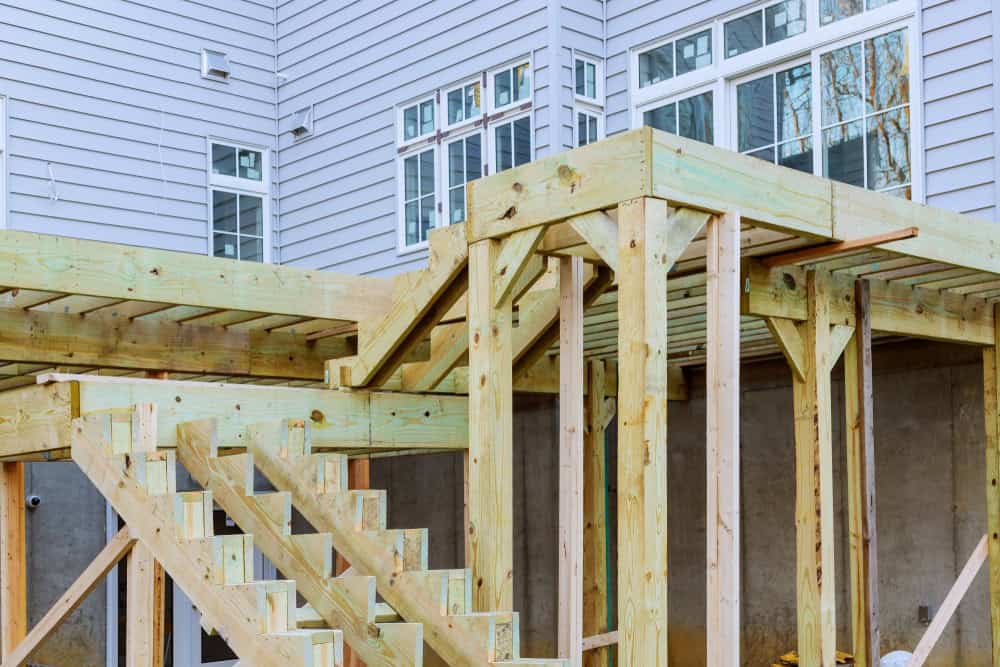
Your deck’s foundation determines its longevity and safety. Connecticut’s frost line requirements mean footings must extend below the freeze line to prevent heaving and structural damage.
Proper drainage around footings prevents water accumulation that leads to frost damage. We understand Connecticut soil types, drainage patterns, and seasonal challenges that affect foundation stability.
Framing connections to your house require special attention. Ledger boards must be properly flashed and attached with appropriate fasteners spaced according to code requirements. This connection point bears significant loads and must be engineered to handle both vertical weight and lateral forces from wind and seismic activity.
Joist spacing, beam sizing, and post placement all follow engineering standards based on expected loads and span requirements. Composite decking may require closer joist spacing than traditional wood, affecting framing costs but ensuring proper support.
We use galvanized or stainless steel fasteners that resist corrosion in Connecticut’s humid climate. Proper fastener selection prevents premature failure and maintains structural integrity over decades of service.
The framing stage is where experienced craftsmanship shows. Precise measurements, square corners, and level surfaces create the foundation for a deck that looks professional and performs reliably. Shortcuts in framing create problems that become expensive to fix later.
Deck Surface Installation and Finishing Details
Surface installation transforms your deck frame into a functional outdoor living space. Proper installation techniques ensure your deck looks great and performs well for years to come.
Board spacing allows for thermal expansion and drainage. Connecticut’s temperature swings require specific gap recommendations that vary by material type. Wood needs more expansion room than composite materials, and installation timing affects final spacing.
Fastener placement affects both appearance and performance. Hidden fastener systems create clean lines without visible screws, while traditional face-fastening offers simplicity and lower costs. We match fastener systems to your material choice and aesthetic preferences.
Railing installation must meet specific height and spacing requirements. Connecticut code requires guardrails for decks more than 30 inches above grade, with balusters spaced to prevent passage of a 4-inch sphere. Handrail graspability and return requirements ensure user safety.
Stair construction follows precise geometric requirements for riser height and tread depth. Consistent dimensions prevent tripping hazards while meeting accessibility standards. Proper stair railings extend the full length and include returns at both ends.
Final details like post caps, trim boards, and lighting integration distinguish professional installations from basic construction. These finishing touches protect structural elements while creating the polished appearance that enhances your home’s value.
We clean up daily and conduct final inspections to ensure every detail meets our standards. We walk through the completed project with you, explaining care and maintenance requirements specific to your materials and installation.
Seasonal Deck Maintenance for Connecticut's Climate
Connecticut’s weather demands proactive deck maintenance to prevent problems and extend your deck’s lifespan. A seasonal approach addresses specific challenges throughout the year.
Spring inspections identify winter damage early when repairs are less costly. Look for loose fasteners, damaged boards, and signs of moisture intrusion. Clean away debris that traps moisture and creates conditions for rot or mold growth.
Summer maintenance focuses on UV protection and regular cleaning. Wood decks may need annual staining or sealing, while composite decks benefit from periodic washing to remove dirt and organic matter. Check drainage systems to ensure water flows away from your deck structure.
Fall preparation involves thorough cleaning and minor repairs before winter weather arrives. Remove leaves and debris that can stain surfaces or block drainage. This is the ideal time for protective treatments that need warm weather for proper curing.
Winter monitoring helps prevent ice damage and excessive snow loads. While Connecticut building codes account for typical snow loads, removing heavy accumulations protects your investment and ensures safe access when weather permits outdoor use.
Working with Sullivan Contracting ensures your deck receives the professional attention it deserves, from initial design through ongoing maintenance, keeping your outdoor space beautiful and functional year-round.