Summary:
Why Vinyl Siding Works for Connecticut Homes
Connecticut isn’t easy on home exteriors. Freeze-thaw cycles crack and split wood. Heavy snow creates moisture problems. Summer humidity tests every seal. Your siding needs to handle all of it without falling apart.
Vinyl siding performs in this climate because it doesn’t absorb moisture. No rot. No warping. No termites or carpenter ants making themselves at home. The material flexes with temperature changes instead of cracking, and quality panels resist wind speeds exceeding 110 mph.
You’re not out there repainting every few years or replacing rotted sections. The color goes through the entire panel—nothing to peel or chip away. Keep it clean with a garden hose once or twice a year, and you’re done. That’s the practical difference for homeowners tired of weekend maintenance projects.
How Vinyl Siding Handles Connecticut Weather Conditions
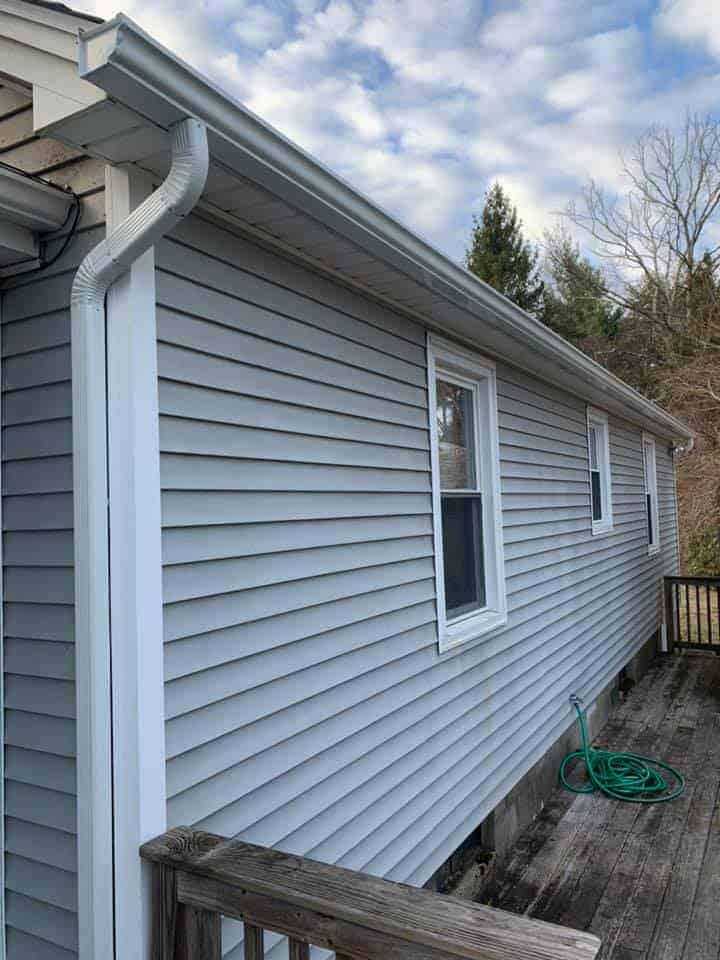
New England weather demands exterior materials that perform year after year. Quality vinyl siding includes UV stabilizers that prevent fading even after years of sun exposure. The material blocks moisture, which means you avoid mold, mildew, and rot behind your walls—problems that plague wood siding in humid Connecticut summers.
When temperatures drop below freezing, vinyl siding maintains its shape and strength. Wood cracks and splits. Fiber cement requires specific maintenance protocols. Vinyl simply flexes with the cold, then returns to form when temperatures rise. That’s engineered performance, not a design flaw.
Heavy rain and wind don’t penetrate properly installed vinyl siding. The interlocking panels create a weather-resistant barrier over house wrap and flashing. Water runs off instead of soaking in. Your home’s structure stays dry and protected from the moisture that causes expensive damage.
Ice dams and heavy snow loads are facts of life in Connecticut. Vinyl siding doesn’t absorb moisture from melting snow, so you skip the rot and decay that wood siding owners deal with every spring. The material won’t corrode like metal or crack like stucco. It does its job quietly, year after year, without demanding your attention.
Quality matters here more than you might think. Premium vinyl siding offers impact resistance for hail and flying debris. Thickness affects durability—thicker panels with reinforced construction maintain their shape and appearance for decades. When you’re comparing siding options, material quality directly determines how long your investment protects your home. Cheap siding might save money upfront, but it costs more when you’re replacing it in ten years instead of thirty.
Energy Efficiency Benefits and Lower Utility Bills
Your heating and cooling bills tell you how well your home’s exterior insulates against outdoor temperatures. Standard vinyl siding creates a protective layer. Insulated vinyl siding takes it further with foam backing that adds real thermal resistance.
Homeowners who install insulated vinyl siding typically see heating and cooling costs drop between 7 and 15 percent. Some see reductions up to 20 percent depending on home size, existing insulation, and how much temperature fluctuation their HVAC system was fighting before. Those savings compound year after year, gradually offsetting your installation investment while keeping your home more comfortable.
The insulation works in both directions. Winter: it reduces heat loss through your walls, so your furnace doesn’t run constantly trying to maintain 68 degrees. Summer: it blocks heat from penetrating inside, so your air conditioner isn’t fighting the sun all afternoon. Indoor temperatures stay more stable, and you’re not constantly adjusting the thermostat.
This affects more than monthly utility bills. Better insulation means less wear on your HVAC equipment. Systems last longer when they’re not cycling on and off every twenty minutes compensating for poor exterior insulation. You’re extending the life of expensive equipment while using less energy—that’s value that adds up over time.
Connecticut’s temperature extremes make energy efficiency particularly valuable. When January temperatures hit the teens and August heat pushes into the nineties, every bit of insulation counts. The thermal barrier insulated vinyl siding provides keeps your home comfortable while reducing the energy required to maintain that comfort. Your family stays comfortable. Your bills stay reasonable. Your HVAC system stays healthy.
The R-value—thermal resistance measurement—for quality insulated vinyl siding reaches R-4 or higher. That’s significant improvement over standard siding. Combined with proper wall cavity insulation, you create an effective thermal envelope that protects both your home and your budget. Some installations even qualify for energy-efficient tax credits when they meet International Energy Conservation Code standards, putting more money back in your pocket.
Professional Vinyl Siding Installation Process
Professional installation determines whether your vinyl siding performs well for twenty years or starts failing in five. The process involves more than attaching panels to walls. It requires proper preparation, correct installation technique, and attention to details you’ll never see once the job is complete.
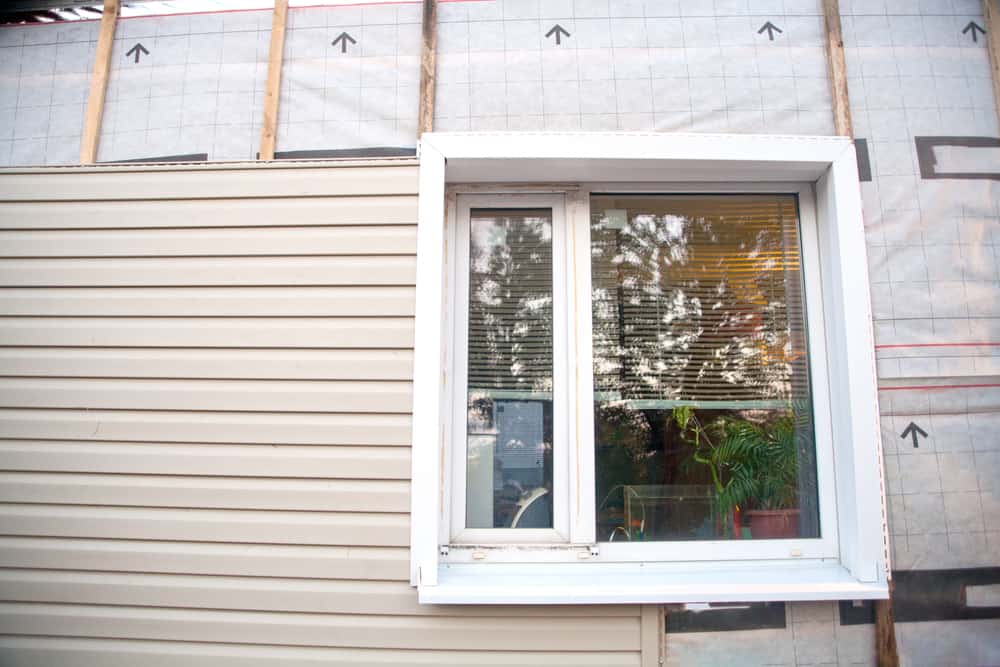
Installation starts with inspecting your home’s exterior. Any damaged sheathing gets repaired before new siding goes up. A weather-resistant barrier—house wrap—gets installed to prevent moisture from reaching your home’s structure. Flashing around windows, doors, and corners creates waterproof seals at every vulnerable point. These foundational steps protect your home for decades, but they’re invisible once siding covers them.
After preparation, we establish level reference lines around your entire house. Vinyl siding must go up level, or the whole project looks wrong and may not perform correctly. Starter strips provide the base for the first row of siding. From there, each panel locks into the one below it and gets fastened according to manufacturer specifications that account for thermal expansion and contraction.
Installation Details That Affect Long-Term Performance

How we fasten vinyl siding affects performance as much as material quality. Nails or fasteners go in the center of the nail slots—never at the ends where they’d restrict movement. There’s a small gap between the fastener head and the siding panel, roughly the width of a dime. This allows panels to expand and contract with temperature changes without buckling or warping.
Panels overlap at factory-notched cutouts, typically one to one-and-a-quarter inches. Overlap direction matters—we position seams away from high-traffic areas and main sight lines so they’re less visible from the street. Proper spacing between panel ends and trim pieces allows for thermal expansion. In cold weather, we leave slightly more space because vinyl contracts when temperatures drop.
Corner posts, J-channel around openings, and trim pieces all require precise installation. These accessories create finished edges and direct water away from vulnerable areas. Caulking goes only where manufacturer specifications require it. Too much caulking actually traps moisture and creates problems instead of preventing them.
We check our work constantly throughout installation. We verify level lines every few courses. We ensure panels lock together completely along their full length. We inspect flashing and weatherproofing at every window, door, and corner. These ongoing checks catch issues before they become permanent problems hidden behind finished siding.
Installation timelines depend on your home’s size and complexity. Most residential projects complete within several days to a week. Weather affects the schedule—we can’t work effectively in extreme cold or heavy rain. We provide realistic timelines upfront and communicate immediately about any delays.
Proper installation isn’t just about appearance. It affects your manufacturer’s warranty. Many vinyl siding warranties require professional installation to remain valid. The warranty protects your investment, but only when installation meets manufacturer standards. This is exactly why choosing an experienced siding contractor in Connecticut matters as much as choosing quality materials. You’re not just paying for labor—you’re paying for expertise that protects your investment.
Vinyl Siding Colors, Styles, and Design Options
Vinyl siding offers more design flexibility than most homeowners expect. The color palette extends well beyond basic white and beige. You’ll find classic neutrals, bold coastal blues, deep charcoals, earthy greens, and warm taupes. The color is manufactured throughout the entire panel—not just surface coating—so it maintains its appearance for decades without fading.
Texture options range from smooth finishes to subtle grain patterns to deep wood-grain embossing that convincingly mimics natural cedar. Some profiles replicate traditional wood lap siding or cedar shakes. You get the appearance of premium materials without the maintenance headaches. The texture adds dimension and visual interest that flat siding simply can’t match.
Profile choices affect your home’s entire character. Horizontal lap siding—traditional clapboard—works with most architectural styles and offers timeless appeal. Dutch lap siding includes a decorative shadow line that adds depth and visual interest. Board-and-batten creates vertical patterns popular with farmhouse and modern designs. Shake and shingle profiles bring texture and cottage-style charm.
You can mix profiles for custom looks. Use horizontal siding on main walls and shake siding on gables for contrast. Combine different colors on body and trim. The variety lets you create a look that reflects your style while staying within budget. This isn’t limited to expensive custom homes—vinyl siding makes distinctive exteriors accessible.
Color trends lean toward both moody darks and soft neutrals. Charcoal gray, deep navy, and even black create sophisticated modern exteriors. Sage green, soft blue, and warm beige offer timeless appeal that harmonizes with natural surroundings. Classic white remains popular for its clean appearance and versatility with any trim color or landscaping.
When selecting colors for your Connecticut home, consider your roof, landscaping, and neighborhood character. Lighter colors make homes appear larger and reflect summer heat. Darker colors create visual drama and hide dirt better but absorb more heat. Neutral tones typically offer best resale value if you’re planning to sell within a few years. But if you’re staying long-term, choose colors that make you happy every time you pull into your driveway. Your home should reflect your taste, not just market trends.
Protecting Your Connecticut Home with Quality Vinyl Siding
Your home’s exterior protects everything inside from Connecticut weather year-round. Vinyl siding provides lasting protection without demanding constant maintenance. It blocks moisture, improves energy efficiency, and maintains its appearance through decades of freeze-thaw cycles, summer heat, and everything between.
The investment pays off through lower maintenance costs, reduced energy bills, and increased home value. You’re not repainting every few years or replacing rotted sections. You’re not watching heating and cooling costs climb because your exterior isn’t doing its job. Quality vinyl siding, professionally installed, simply works.
When you’re ready to upgrade your home’s exterior with siding that protects and performs, experience matters. We bring over 20 years of expertise to every project in New London County and Windham County. Our team handles everything from material selection through final installation, backed by a 10-year labor warranty and lifetime manufacturer’s warranty. Contact us to discuss your siding project and get a clear, honest assessment of what your home needs.